BIP.Verco are proud to support the delivery of Springboard – one of the UK’s leading funding competitions for low carbon innovation. For the last 14 years BIP.Verco have been Shell’s technical assessment delivery partner - our role is to review and evaluate the low carbon business ideas submitted to the programme, of which there are routinely over 100 each year. We select the 16 who will proceed to the semi-finals. This is based on the credibility of the commercial strategy, the level of innovation demonstrated and the potential of the idea having a material impact on the transition to zero carbon.Read more
Climate change is more prominent than ever in UK and world news. The UK has had its first coal-free week in power generation since the 1880s, and the UK Parliament has recently declared a climate emergency. The Committee on Climate Change’s recently released report recommended a reduction in carbon emissions to nearly zero by 2050. Solar photovoltaics (PV) have an important role to play in meeting this ambition.Read more
BIP.Verco is a partner in the ALliance for Deep RENovation (ALDREN) a 30 month Horizon 2020 project which started in November 2017. The purpose of ALDREN is to develop protocols which support deep renovations of office and hotel buildings and to demonstrate their effectiveness by real-life pilot studies. It is thereby intended to encourage investment and accelerate the movement towards a nearly zero energy non-residential building stock across the EU, as targeted by 2050 to meet Paris Agreement commitments. The project is co-ordinated by the Centre Scientifique et Technique du Batiment (CSTB) in France, with seven expert partners from around Europe.Read more
BIES has launched an informal consultation titled ‘Designing the Industrial Energy Transformation Fund’ (IETF), which was announced in the autumn Budget in 2018.Read more
Manufacturing sites typically lose 2-7% of product during processing*.Product loss in manufacturing can be extremely costly for a site; these losses are typically difficult to address since it is hard to quantify where and when product is lost in the manufacturing process.Product loss incurs costs in four main ways:Read more
BIP.Verco were proud to be the programme sponsor for the first event of 2019 hosted by The Crowd on “Harnessing collective intelligence to accelerate the Sustainable Development Goals”. The event was hosted by the RIBA in London and had a fantastic line up of speakers, from finance to the charity sector. Geoff Mulgan from Nesta and author of the book ‘Big Mind’ started the presentations by asking what resources of intelligence could be used to allow a city to function as if it were a human brain. Steve Waygood from Aviva voiced his concerns of how business externalities are not incorporated into investment decisions fundamentally ignoring the one planet boundary, and the vital need for more clarity into how our money is being invested. Sam Baker, Partner at Monitor Deloitte, warned of the myopia of middle management as one of the biggest challenges to achieving the SDG’s, and also the essential role of collective intelligence in reporting to ensure that annual improvements are demonstrated, and the impact on stakeholders that we are trying to engage with is measured and fully understood. Linked to this, in the absence of a global regulator to hold companies to account for their commitment to the SDG’s, the World Benchmarking Alliance, which was launched last September, aims to provide an essential tool for measuring and comparing corporate performance on working towards the SDG’s.Read more
The Science Based Targets Initiative (SBTi) has announced that it will publish an updated set of target validation criteria in April to reflect the latest science from the Intergovernmental Panel on Climate Change’s (IPCC) Special Report on Global Warming of 1.5°C, published in October 2018.Read more
From 2016 to 2018, BIP.Verco were commissioned under the FCO’s Global Britain Fund with the British Embassy in Russia to provide policy advice and evaluation for the Russian Federation. Over three years, we delivered research and advice for the Ministry for Economic Development and Ministry for Natural Resources on international best practice examples of carbon regulation, carbon pricing and energy efficiency policy including the UK. As a business, BIP.Verco has been involved with policy projects at the highest international levels since the 1990s - we were one of the founders of the UK Emissions Trading scheme in 1999 - and we continue to help shape the structure of today’s international regulatory landscape.Read more
Austrian community catering supplier GOURMET leads the way in energy efficiency with the first European industry project certified by the Investor Confidence Project.The Investor Confidence Project’s innovative Investor Ready Energy Efficiency™ Certification has been awarded to a waste heat utilisation project at GMS GOURMET GmbH. The project saves natural gas and electricity by using the waste heat of two fast cooling plants to support the heating demand of three ventilation systems at GOURMET’s production site in Vienna.Read more
The ICP Europe Technical Team is soon to commence its fourth round of training for future Project Developers and Quality Assurance Assessors looking to join ENGIE, E.ON, Veolia and other companies in being recognised as energy efficiency market leaders and make use of our recently launched protocols for both ‘Industry and Energy Supply’ and ‘Street Lighting’ projects. BIP.Verco is UK advocate for the Investor Confidence Project (ICP) Europe, and is leading the technical development of the ICP tools across Europe.Read more
There is growing acknowledgement that value of an energy efficient building goes beyond the cost of the energy saved, with particular attention paid to health and well-being and the consequences on productivity. But even that is far from the full extent of the potential value.Read more
For many years, BIP.Verco has been aware of the energy performance gap for buildings and advocated to our clients and to policy makers the need to assess the energy performance of non-domestic buildings by measurement, rather than rely on design-based efficiency metrics like EPCs…..Read more
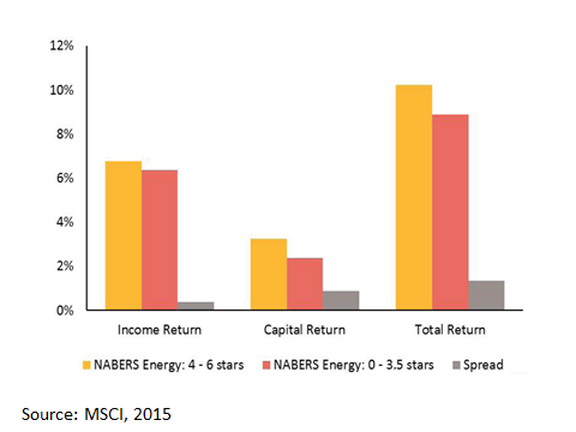
Over the last ten years, Australia has seen a 40% reduction in energy intensity of its total building stock. Critical to this success was addressing how the operational performance of buildings was managed. By adopting the same strategies, the UK has the potential to achieve similar results.Read more
After a gruelling three years of research, review and negotiation, the Intergovernmental Panel on Climate Change (IPCC) has finally issued its special report on the impact of 1.5°C global warming above pre-industrial levels. For those tracking global efforts to curb GHG emissions this is a watershed moment and a severe reminder of the pace at which our climate is changing. It concludes that there is simply no more time for delays in drastically cutting global carbon emissions if we wish to avoid the worst impacts of climate change.Read more
We review the approaches to setting Science Based Targets (SBTs). How do we act on the warning signs with a viable and truly science-based approach?Read more
The Environment Agency (EA) published statistics from its programme of over 200 ESOS period 1 compliance audits: Only 16% of ESOS audits were fully compliant. In 75% of cases, remedial actions were required and 5% were deemed ‘non-compliant’.Read more